

Much of the time, whenever you visit a website these days, you start to see a familiar pattern. Subject lines blur together, the blog posts all open with the same tidy hook, and every brand uses phrasing that feels unoriginal. AI is being used to mass-produce content and brand voices, but in doing so, it is becoming more difficult for businesses to stand out. Learning to keep your brand voice human with AI is no longer a nice-to-have in 2026; it is how you get noticed at all.
According to the AI Economy Report 2026, a research project carried out by Trinity College Dublin and Microsoft, the use of artificial intelligence saves up to 1,000 hours monthly for medium-sized businesses, and even goes up to 5,000 hours for larger corporations. This shows that AI is bringing real value to companies.
Artificial intelligence has handed us a genuine opportunity to fix this: hours given back, drafts produced in seconds, and a creative runway most teams could only dream of a few years ago. The catch is that when everyone reaches for the same tool, the result is a wall of content that looks polished and says nothing. The truth is, you can lean on AI and still sound more human, more memorable, and more unmistakably you than ever before. At Black Pug Studio, this is how we combine our creativity with AI tools when it comes to branding with our clients and internal projects.
Why Generic AI Content Is a Real Risk
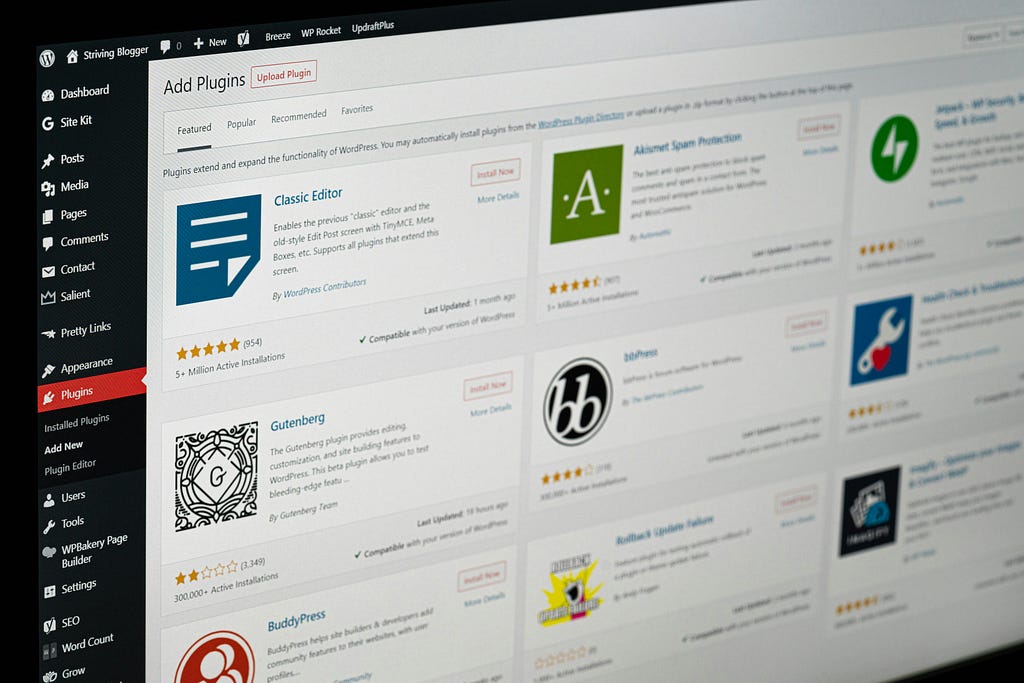
The scale of the ‘AI slop’ problem can’t be overstated. In fact, an Ahrefs study of 900,000 web pages found that 74.2% of newly created pages now contain AI-generated content. Millions of AI-assisted posts, emails, and articles go live every single day, and a huge share of them lean on the same prompts and the same patterns.
When your content blends into that clutter, your brand suffers. Readers start to trust you less. Your message loses any real meaning, and your content gets skipped. Conversions drop because nothing about your writing stood out to potential customers.
You can try out this exercise to test the uniqueness of your content and voice: would anyone notice if a competitor swapped their logo onto your content? If that is the case, you have a brand voice problem, and this is likely what is affecting your online visibility.
What is Brand Voice and why is it important?

Before you can protect your brand voice, it would be beneficial to know exactly what it is for organizations and businesses, no matter the size. The official brand voice is the consistent personality behind everything you publish, whether it’s the website, ad campaigns, social media or emails. It’s essentially the part of you that stays the same whether you are celebrating a launch or apologizing for a technical error.
A strong brand voice rests on three pillars: personality (the character that comes through), point of view (the beliefs you are willing to stand behind and back up), and vocabulary (the specific words and phrases that feel most relevant to your brand). Consistency of tone matters for your audience, whether it’s serious, playful, casual or technical. That combination is part of your brand kit because it is the one thing AI cannot reproduce until you teach it what makes you sound like you.
How to Build a Brand Voice AI Can Follow

The fix for preserving the human voice in your brand is actually very practical. Start by writing a simple voice guide for AI to follow, such as this example: pick three adjectives that describe how you want to sound, list a handful of words you love, and name the words you never want to see in your copy.
Next, gather real examples by pulling your best-performing lines, the posts and emails that actually landed, so you have proof of your voice in action. Then feed all of it to the model.
Instead of prompting AI for “a professional blog post,” give it your voice guide and your favorite examples and ask it to write the way you already do. The difference between a generic draft and a genuinely on-brand one usually comes down to how well you brief the tool.
The Human-in-the-Loop Workflow

Think of AI as a fast first-draft assistant writer and yourself as the main writer and editor who gives it a shape and soul. Let the model handle the heavy lifting of structure and speed, then you can step in to mold, cut, and sharpen until it reads exactly as a regular human would write it. This is precisely where you add what no model can invent on its own: a real client story, a strong opinion, a hard-won lesson, or a win you are proud of.
A flat, unengaging line such as “We help businesses improve their online presence” could be rewritten as “We have spent years turning forgettable websites into the thing clients brag about over dinner.” It’s the same idea, but the only difference is adding a personal touch that comes from your own brainstorming process.
Signature Moves That Keep Your Brand Voice Human

There are a few deliberate habits you can take on that will keep your content authentically yours and reduce the chances of blending in with brands that rely on more generic messaging.
- Take a clear stance: Make your point of view obvious, as fence-sitting may read as filler.
- Choose specifics over platitudes: Real names, real statistics, and real scenarios or case studies always beat vague promises.
- Add personality cues that match your brand: This could be a humorous quip, a vivid metaphor, or a sentence rhythm readers start to recognize.
- Back it up with proof: A quick case study or portfolio piece, or a behind-the-scenes glimpse like the story behind PugSync, reminds people real humans are doing real work here.
Common AI Content Traps to Avoid

Even with the right workflow, a few routines have the power to undo your hard work. Here are a few things to keep in mind when it comes to using AI tools for branding:
- Publishing unedited AI drafts: This is the fastest way to sound like everyone else and negatively impact audience trust.
- Chasing every trend. Do this, and your brand becomes indistinguishable from the dozen others copying the same playbook.
- Over-optimizing for keywords. Stuffing phrases in until a real person would never finish the sentence wrecks readability.
If you steer clear of these three, you have a better chance of keeping both your search rankings and your personal touch that draws your audience in.
Frequently Asked Questions
How do you keep your brand voice human when using AI?
Give the model a short voice guide (such as three tone adjectives, words you love, words you’re banning) plus a few of your best-performing examples, then edit every draft to add real stories, opinions, and specifics. AI handles the first draft; you add the creative and personal touch.
Can AI copy a brand voice?
AI can mimic surface patterns, but your point of view, real client stories, and hard-won lessons are yours alone, and they are what make your voice impossible to clone.
What is a brand voice?
Brand voice is the consistent personality behind everything you publish, built on three pillars: personality, point of view, and vocabulary. It stays the same whether you are celebrating a launch or apologizing for an outage or technical error.
Conclusion: Your Voice Is the Differentiator
Here is what it all comes down to when it comes to avoiding a generic tone for your brand. AI is the tool, but your voice is the differentiator, and no amount of automation can copy your voice without your input. Standing out in 2026 is not a matter of luck or budget; it is a series of minor, intentional, and even personal choices to sound like your authentic self when sounding generic would be so much easier. Make those choices consistently, and as a result, you will become the brand people remember in a feed full of forgettable ones.
Need help creating or nurturing a brand voice that no algorithm can fake? Explore our branding services or talk to Black Pug Studio today for more details on how to get started.
Interested in AI services? Book a free discovery call with us!

If you’re interested in implementing practical AI tools to boost your creative workflow but don’t know where to begin, we would love to hear from you. At Black Pug Studio in Galway, we offer a free 30-minute discovery call to discuss your challenges, explore where AI might genuinely help, and give you an honest picture of what’s realistic: no obligation, no hard sell, just a useful conversation. You can also explore more of our thinking on AI and multiple other topics on our blog.
Generic AI Is Everywhere: How to Keep Your Brand Voice Human in 2026 was originally published in Creative by Black Pug Studio on Medium, where people are continuing the conversation by highlighting and responding to this story.