In 2026, search has entered a new era. A staggering 60% of Google searches in 2026 end without a single click, and when AI Overviews appear in search results, the zero-click rate goes up to 83%. Google is now completely evolving from a search engine to an answer engine, and for small businesses, this means your website traffic could be shrinking even if your content is high-quality.
But you shouldn’t see the rise of zero-search as a death sentence for your website. Rather, you should be viewing it as an opportunity to adapt your SEO strategy. At Black Pug Studio in Galway, we know that the businesses that will win in the age of zero-click search are the ones that will adjust how they approach online visibility. The numbers prove it: the clicks that survive AI overviews convert 23% better.
In this article, we will be breaking down how you should rethink your optimization strategy and ensure your business stays visible, cited, and clicked.
1. What Is Zero-Click Search (And Why Should You Care)?
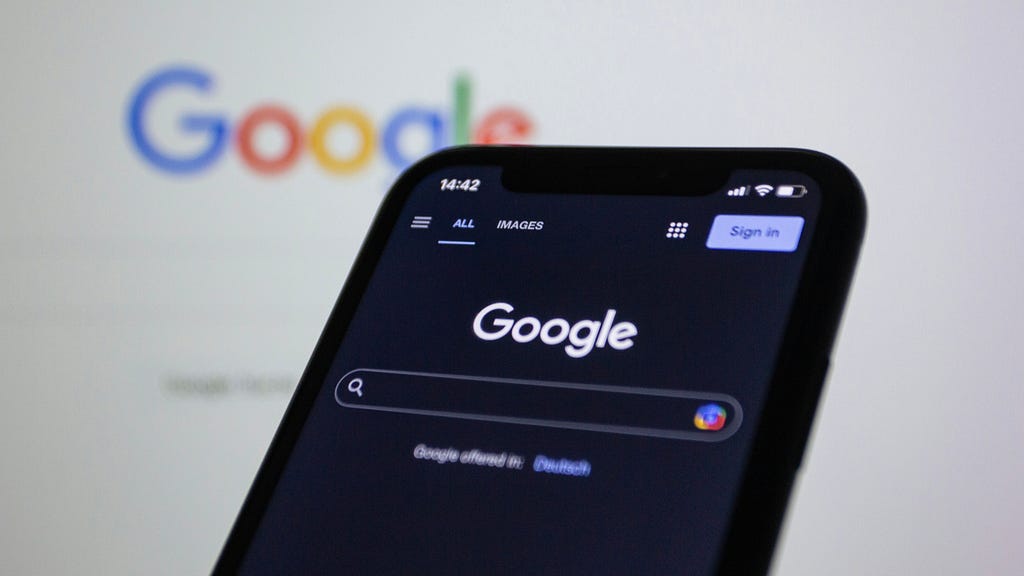
A zero-click search is exactly what it sounds like: a search where Google or other traditional search engines answer the question directly on the results page, so users never actually visit a website. This is largely driven by AI Overviews, Google’s AI-generated summaries powered by Gemini, which now appear at the top of search results and provide instant answers to user queries.
The impact of zero-click search on organic traffic is significant. Click-through rates for top organic results dropped by 18% when AI Overviews appear, with some studies reporting declines of up to 61% for informational queries. According to Semrush, Google Ads are also appearing more frequently, now showing up on 25.56% of AI Overview SERPs, a staggering 394% increase in just eight months. Perhaps most striking, AI Mode queries show a 93% zero-click rate. For small-scale businesses, this means they are gaining fewer visitors from informational queries and are now competing with websites that are showing up in AI Overviews answers.
2. The Silver Lining: Why Quality Beats Quantity Now

This evolution of search shouldn’t be viewed with a purely negative lens, however. While overall click volume may be declining, the clicks that do come through are more valuable than ever. Users who click through from AI Overviews tend to be higher-intent visitors, meaning they’ve already viewed the surface-level answer and are looking for something deeper. Even better, brands that are cited in AI Overviews earn 35% more organic clicks and 91% more paid clicks compared to those that aren’t.
This calls for a fundamental mindset shift for website and business owners. Instead of chasing traffic numbers, small businesses should start measuring visibility within the SERP, citation frequency, and conversion quality. New AI-related KPIs like share of voice in AI answers, brand mentions across AI-generated responses, and conversion rate per session will give you a far more accurate picture of your true online performance in 2026.
3. Structure Your Content Like AI Thinks

Zero-click search isn’t going anywhere, but neither is your opportunity to benefit from it. The real question now is: how do you ensure AI pulls from your content when it builds an answer? It all comes down to structure.
AI doesn’t read the way search engines used to. Instead of matching keywords and counting backlinks, it evaluates your content for clarity, depth, and relevance, giving preference to pages that are modular, well-organized, and straight to the point. Think of each page you publish as a knowledge hub. The cleaner and more accessible your insights are, the easier it is for AI to extract them and cite you as the authority.
Here are some practical ways to structure your content for maximum visibility:
- Use Q&A formats: Write headings as questions your customers actually ask (supports voice search and long-tail keywords too).
- Lead with the answer: Put the key takeaway in the first sentence of each section, then expand. AI pulls concise, definitive statements.
- Break content into scannable blocks: Short paragraphs, bullet points, numbered lists, and clear H2/H3 headings.
- Create “one-stop” resources: Comprehensive coverage of a topic improves AI relevance scoring. Cover related subtopics so AI sees your page as authoritative.
- Use natural, conversational language: Write in complete, context-rich sentences that could serve as direct answers (e.g., “The best time to post on Instagram for small businesses is…”).
4. Schema Markup: Speak AI’s Language
Schema markup is invisible code you add to a webpage that labels what each piece of information means for search engines and AI systems, a bit like putting name tags on your headline, FAQs, products, and business details so they can be understood and reused accurately. When your content is marked up properly, it can have a 2.5x higher chance of appearing in AI-generated answers and can improve click-through rate (CTR). For example, Rotten Tomatoes saw a 25% higher CTR for pages enhanced with structured data compared to pages without structured data implemented.
The most important schema types you should keep in mind, especially if you have a small business, are:
- Local Business Details (name, address, hours, reviews)
- FAQ sections (question-and-answer pairs)
- Article (author, date, headline)
- Product (price, availability, reviews)
- How To (step-by-step guides)
Here are some practical steps you can undertake while implementing schema markup:
- Use free tools like Google’s Structured Data Markup Helper or Schema.org generators.
- Validate with Google’s Rich Results Test.
- Keep schema accurate and updated whenever page content changes.
- Don’t overdo it; instead, only mark up visible, truthful content.
5. Entity Optimization: Make Your Brand Unmistakable
Thanks to developments in AI, search engines now understand concepts and identities, rather than just keywords. Your business is essentially an “entity” in Google’s knowledge graph, hence the name entity SEO. This matters in 2026 because understanding entities overtakes traditional keyword strategy. AI systems need to confidently identify who you are and what you’re an authority on.
Here are some actionable tips to consider for entity optimization:
- Nail your About page: AI models increasingly weigh About Us pages when assessing authority. Make yours detailed, specific, and consistent with other sources.
- Be consistent everywhere: Same business name, address, description across your website, Google Business Profile, social media, directories.
- Mention key entities with context: Reference your brand, tools, services, and location naturally in content (e.g., “At [Business Name], we specialize in…”).
- Build topical authority: Publish clusters of related content around your core expertise so AI recognizes you as the go-to source.
- Leverage E-E-A-T signals: Showcase real experience, author credentials, client case studies, and testimonials.
6. Think Beyond Google: Search Everywhere Optimization

In 2026, people search across AI chatbots (ChatGPT, Perplexity, Claude), social platforms (TikTok, YouTube, Instagram), and forums (Reddit), so “search” is no longer just for Google or other traditional search engines. AI assistants also pull information from the entire web, not just what is traditionally indexed, which means businesses of all sizes need to show up consistently wherever their audience asks questions and makes decisions.
Some quick wins include:
- Optimize your Google Business Profile as this is critical for local AI results.
- Be active on platforms where your audience asks questions.
- Encourage and respond to reviews, as AI trusts well-reviewed businesses.
- Create video content and upload it to platforms like YouTube, which is one of the largest global search engines and also a major AI training source.
Quick FAQ
What is zero-click search?
Zero-click search occurs when a search engine answers a user query directly on the results page, thus the user never clicks through to a website. This is largely driven by AI Overviews, which provide instant, AI-generated summaries at the top of Google SERPs.
How do AI Overviews affect small business website traffic?
AI Overviews can reduce organic click-through rates by an average of 18%, and up to 61% for certain queries. However, the clicks that do come through tend to be higher-intent, meaning visitors are more likely to convert.
What is schema markup, and why does it matter for SEO in 2026?
Schema markup is invisible code added to your website that labels your content (like FAQs, business details, and products) so search engines and AI systems can understand and use it. Properly marked-up content has a 2.5x higher chance of appearing in AI-generated answers.
Do I need a big budget to adapt to zero-click search?
Not at all. Many of the most effective strategies, like structuring content with clear headings, adding FAQ sections, optimizing your Google Business Profile, and implementing free schema markup tools, cost nothing but time and consistency.
Should I only focus on Google for SEO?
No. In 2026, people search across AI chatbots (like ChatGPT and Perplexity), social platforms (TikTok, YouTube), and forums (Reddit). A strong strategy means showing up consistently wherever your audience asks questions and makes decisions.
Conclusion
In summary, zero-click search is not going away anytime soon. Small businesses that restructure their web content for AI, implement schema markup, and build strong entity signals will thrive, not just survive. You do not need a massive budget to keep up: all you need is clarity, consistency, and content that earns trust from both humans and machines. Traditional SEO is no longer enough; instead optimizing for the zero-click search era is what will boost your online visibility.
Ready to future-proof your online presence? Contact Black Pug Studio, based in Galway, Ireland, to build a website and SEO strategy that works in the AI era.
Interested in AI services? Book a free discovery call with us!
If you’re interested in implementing practical AI tools in your team workflow but don’t know where to begin, we would love to hear from you. At Black Pug Studio in Galway, we offer a free 30-minute discovery call to discuss your challenges, explore where AI might genuinely help, and give you an honest picture of what’s realistic: no obligation, no hard sell, just a useful conversation. You can also explore more of our thinking on AI and multiple other topics on our blog.
Zero-Click Search Is Here: How AI Overviews Are Changing SEO for Small Businesses was originally published in Creative by Black Pug Studio on Medium, where people are continuing the conversation by highlighting and responding to this story.